Disclosure: Some links in this article are affiliate links. We may earn a commission on qualifying purchases at no extra cost to you.
I've replaced enough air purifier filters at this point to have strong opinions about which "HEPA" label on a product page you can actually trust. The honest answer isn't flattering to the industry: a chunk of the purifiers people call "True HEPA" in Amazon reviews and forum threads no longer carry that claim on the manufacturer's own site.
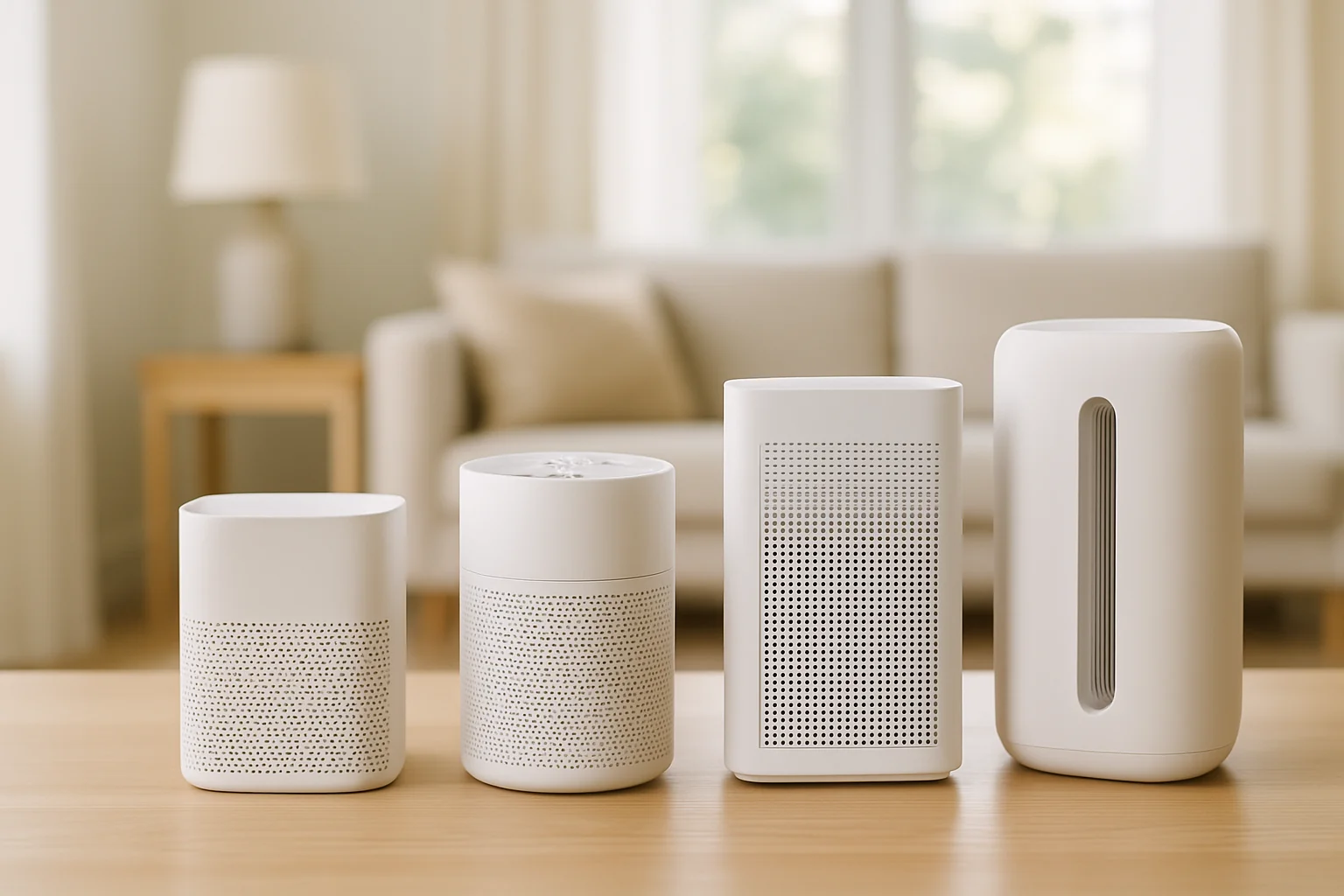
That's not a minor technicality. "HEPA" sounds like a single, regulated thing, but in practice it splits into at least three tiers — genuine mechanical True HEPA tested to 99.97% at 0.3 microns, vague "HEPA-type" or "HEPA-like" marketing with no enforced standard behind it, and hybrid electrostatic-mechanical systems that perform brilliantly but aren't conventional HEPA at all. Buying blind across those three categories is how people end up disappointed with a unit that looked identical to a better one on the product photo.
This guide sorts through ten purifiers that cover the realistic range of needs — allergy relief in a bedroom, pet dander in an open living room, wildfire smoke season, whole-home coverage — and for every single one, I'll tell you exactly what the manufacturer claims about its filtration, whether that claim still holds up, and where the carbon layer (the part that handles odors and gases, which HEPA doesn't touch) is strong or weak. No unit here gets a pass just because the box says HEPA.
Quick Picks: Best HEPA Air Purifiers
- Best overall for allergies & dust: Coway Airmega AP-1512HH Mighty
- Best budget True HEPA: GermGuardian AC4825E
- Best compact/bedroom pick: Levoit Core 300S
- Best for pet odor & dander: Winix 5510
- Best mid-size room: Levoit Core 400S
- Best large room / whole-home: Coway Airmega 400S
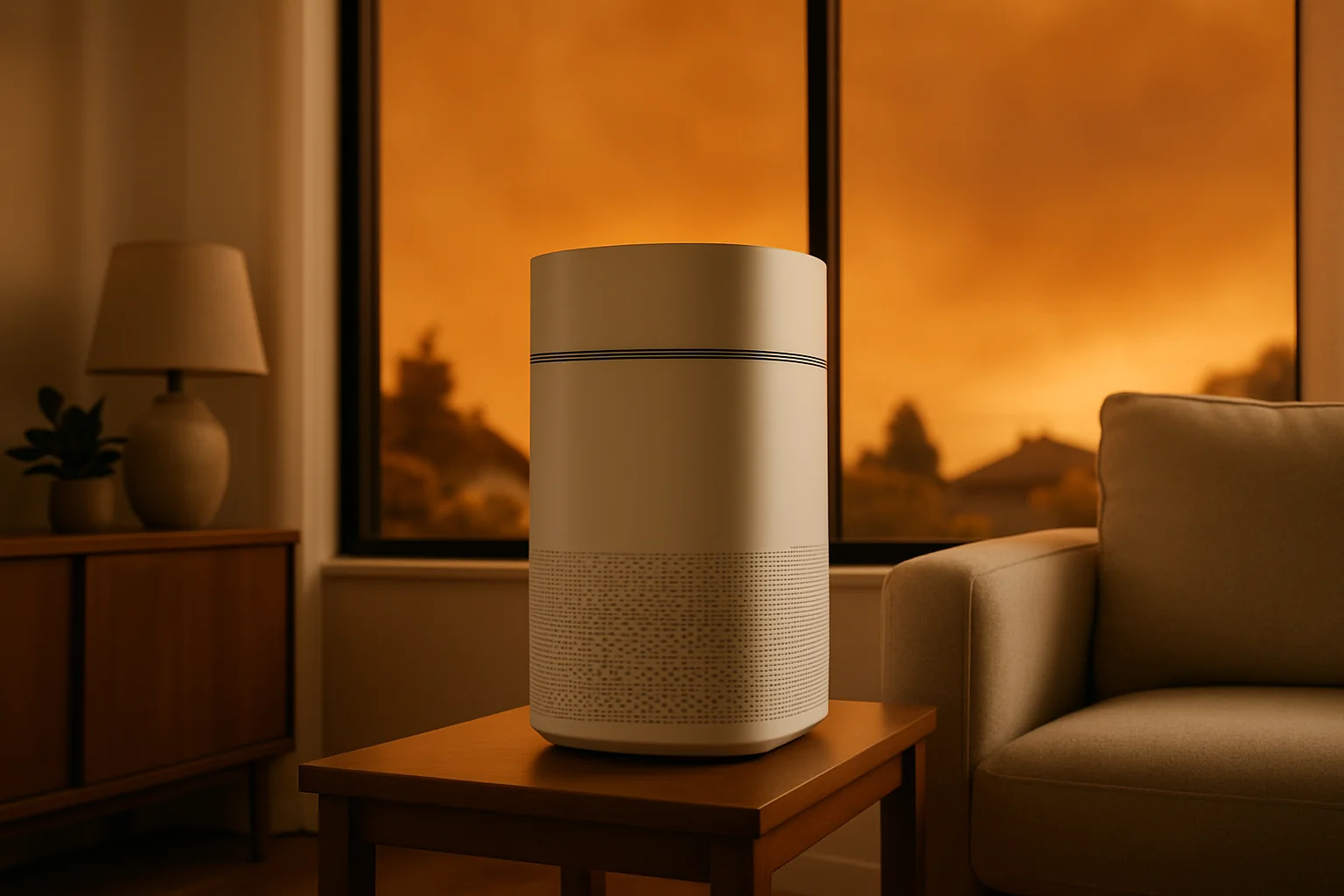
- Best for wildfire smoke: Alen BreatheSmart 75i
- Best max coverage / very large spaces: Medify MA-112
- Best HEPASilent hybrid alternative: Blueair Blue Pure 211i Max
- Best value while current stock lasts: Winix 5500-2
What Makes a Great HEPA Air Purifier?
Before ranking anything, it's worth being precise about what "HEPA" is supposed to mean, because that precision is exactly what a lot of marketing copy avoids.
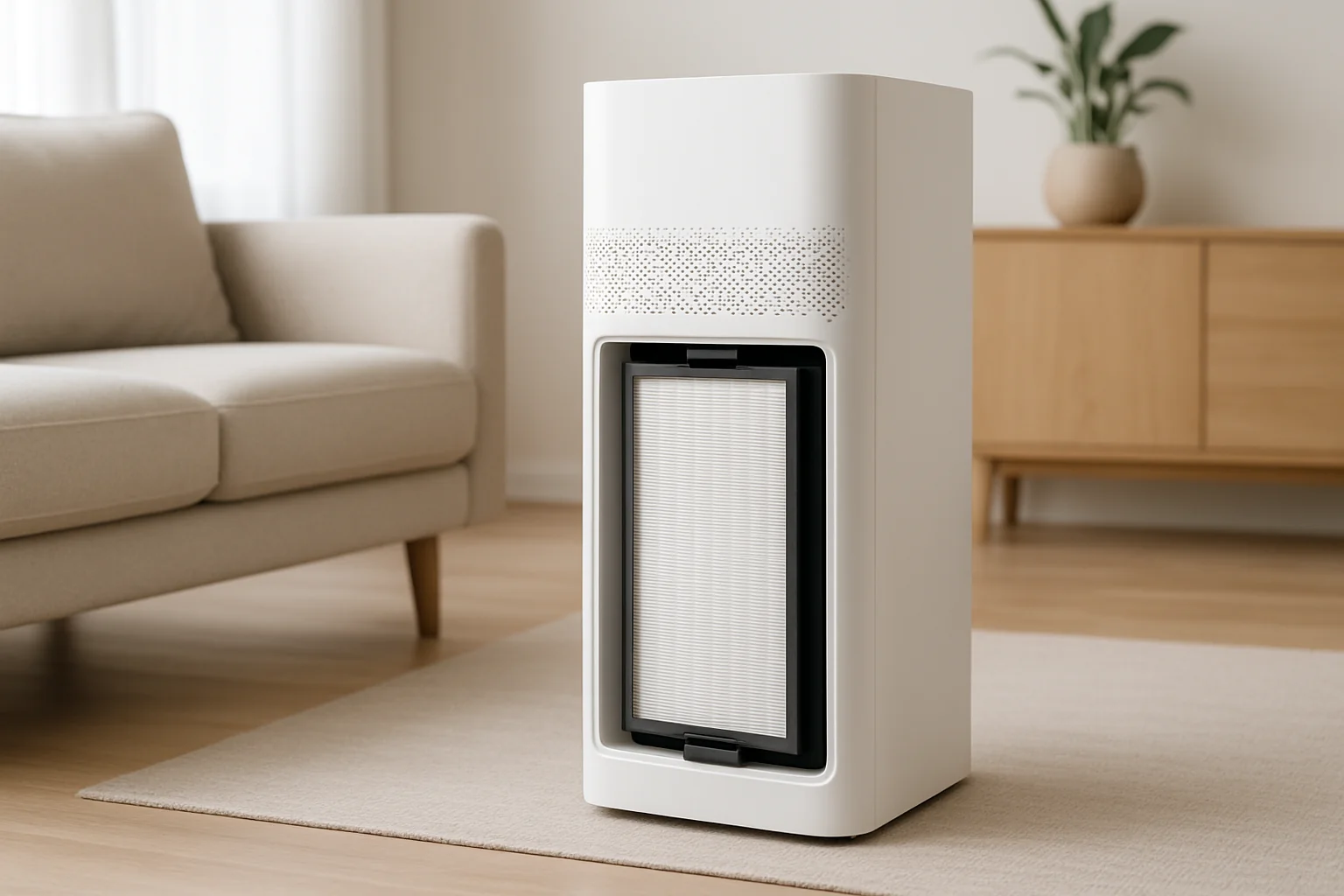
True HEPA is a mechanical filtration standard set by the U.S. Department of Energy: the filter media must capture 99.97% of particles at 0.3 microns — the size range that's hardest to trap, sitting right between the mechanisms that catch bigger particles (impaction and interception) and smaller ones (diffusion). When a brand states this number explicitly, tied to "0.3 microns," it's making a real, checkable claim.
"HEPA-type," "HEPA-like," or "99% HEPA" are not certified terms. Nothing legally stops a company from printing them on packaging for a filter that performs nowhere near the DOE standard. I don't treat these phrases as disqualifying on their own, but I do treat them as a flag to look for independent lab verification before trusting the claim.
Electrostatic-mechanical hybrids — Blueair's HEPASilent technology is the best-known example — combine a mechanical filter with an electrostatic charge that pulls particles toward the media. Lab results for these can be excellent, sometimes matching or beating conventional HEPA units on capture rate. But it's a different mechanism, and a purifier maker calling this "True HEPA" would be stretching the term. I'll flag it explicitly wherever it applies.
Here's why this distinction actually matters to you as a buyer, beyond pedantry: in August 2023, Dyson formally challenged Levoit's "True HEPA" and "H13 True HEPA" claims for the EverestAir, Core 300, and Core 300S line at the BBB's National Advertising Division. Per the BBB National Programs press release, Levoit's parent company VeSync "elected to permanently discontinue the challenged claims," while stating it did "not concede that there was anything misleading" about them. Since then, Levoit's own product pages for the Core 300S and Core 400S no longer say "True HEPA" — they talk about "HEPA-grade performance in Sleep Mode." Plenty of retailer listings and forum posts haven't caught up, and still describe these units as True HEPA. That's worth knowing before you buy one expecting a specific certified standard.
To be clear: this is a marketing-language dispute, not proof the filter media got worse. Independent testing from RTINGS in 2024 (updated in 2025) still measured the Core 400S capturing well over 99.9% of particles at 0.3 microns in practice. The filter works. The label just isn't the certified "True HEPA" claim anymore, and I think you deserve to know that distinction before paying for it under one assumption or another.
There's a second common confusion worth clearing up here: HEPA filters remove particles, not gases. Wildfire smoke, cooking fumes, and pet odor all carry a gas/VOC component that a HEPA filter physically cannot capture — that's activated carbon's job. A unit with excellent HEPA capture and a token carbon layer will clear the smoke haze from a room but leave the smell behind. I've called out carbon quality for every pick below, because it's the detail that separates a purifier that looks good on a spec sheet from one that actually solves the problem you bought it for.
Two other numbers matter more than most shoppers realize:
- CADR (Clean Air Delivery Rate), measured by AHAM Verifide testing, tells you how much clean air the unit actually delivers per minute for smoke, dust, and pollen separately. It's independently tested and comparable across brands — unlike manufacturer "coverage square footage," which is often quoted at a much lower air-change rate than you'd want for real allergy relief.
- Air changes per hour (ACH). Manufacturer coverage claims are frequently based on just 1 ACH. For meaningful allergy or asthma relief, aim for a unit rated at 4.8 ACH for your actual room size — this cuts the "advertised" coverage area roughly in half or more, and it's the single most common reason people end up under-sized.
With that framework in place, here's how the ten purifiers actually compare.
#1 Coway Airmega AP-1512HH Mighty — The Reliable, Genuinely True HEPA All-Rounder
Specs:
- AHAM CADR: 233 smoke / 246 dust / 240 pollen CFM
- Coverage: 361 sq ft at 4.8 ACH (874 sq ft at 2 ACH)
- 4-stage filtration: washable pre-filter, deodorization (activated carbon) filter, True HEPA filter, defeatable Vital Ion ionizer
- Noise: roughly 24–54 dB across speeds
- HEPA filter life ~12 months, carbon filter ~6 months
- Energy Star certified
Positioning: Mid-tier ($$)
HEPA verdict: Genuine, current True HEPA claim from the manufacturer — "captures and reduces up to 99.97% of particles 0.3 microns." No ambiguity here.
Pros:
- Confirmed AHAM-verified CADR across all three particle types
- Runs quietly and efficiently at low/auto speeds
- Long-standing reputation as one of the most recommended purifiers on allergy and pet-owner forums
- Solid 3-year warranty
Cons:
- Louder than some rivals at top speed
- The deodorization filter uses fibrous carbon rather than dense pellets, so it's noticeably weaker on heavy odors than units built around pelletized carbon
Verdict: If you want one purifier that checks every box for dust, dander, and pollen without any asterisk next to the HEPA claim, this is it. It's been a go-to recommendation for years for good reason.
Perfect for: Anyone prioritizing certified True HEPA performance for allergies and everyday dust in a mid-size bedroom or living room.
#2 GermGuardian AC4825E — The Only Sub-$100 Genuine True HEPA Pick
Specs:
- AHAM CADR: 99 smoke / 118 dust / 125 pollen CFM
- Coverage: 153 sq ft at 4.8 ACH
- Filtration: True HEPA filter (Filter B) plus an activated-carbon layer built into the pre-filter, optional UV-C stage
- Noise: up to roughly 55 dB on high
- Filter life 6–8 months
- CARB and ETL Zero Ozone Verified
Positioning: Budget ($)
HEPA verdict: Genuine, AHAM-verified True HEPA claim — a rarity at this price point.
Pros:
- Real, certified True HEPA filtration for a fraction of the price of premium units
- Long-running product with a large, established user base
- Zero-ozone certified
Cons:
- Slow to clear a room compared to higher-CADR units — this is a low-power machine for a small space, not a substitute for something bigger
- The UV-C stage adds little measurable benefit for particle or odor control; skip the UV-equipped variant if price matters more than the extra feature
- Carbon layer is thin and combined with the pre-filter, so odor control is modest
Verdict: This is the honest budget pick — not because it's the most powerful, but because it's the rare sub-$100 unit that isn't hiding behind vague "HEPA-type" language. Size your expectations to a small room and it delivers exactly what it claims.
Perfect for: Small bedrooms, home offices, or dorm rooms where certified True HEPA matters more than raw coverage.
#3 Levoit Core 300S — The Best Compact Pick (With an Important Label Caveat)
Specs:
- CADR around 141–175 CFM depending on test methodology
- Coverage: roughly 219 sq ft at 4.8 ACH
- 3-stage filtration: nylon pre-filter, HEPA-grade filter, pelletized activated carbon (ARC Formula)
- Noise: as low as 22–24 dB in sleep mode
- Filter life 6–8 months
- 100% ozone-free, AHAM Verifide
Positioning: Budget/Mid ($–$$)
HEPA verdict: This is the model where the label caveat matters directly. Levoit no longer markets the Core 300S as "True HEPA" following the 2023 industry dispute — current copy describes "HEPA-grade performance in Sleep Mode." Independent lab data still shows strong particle capture in practice, so I'm not telling you to avoid it; I'm telling you not to expect the certified True HEPA claim on the box.
Pros:
- Genuinely one of the quietest air purifiers you can buy at this size
- Pelletized carbon (not just a thin fabric layer) gives it real odor-handling capacity for its size
- Compact footprint that fits nightstands and small desks easily
Cons:
- Small coverage area — sized for a bedroom or office, not an open living space
- Not marketed as True HEPA, so don't buy it if a certified claim is a dealbreaker for you
- Filter is on the pricier side relative to the unit's small size
Verdict: Best-in-class for quiet, compact filtration in a room under 220 square feet. Go in with accurate expectations about the HEPA labeling and you'll be happy with it.
Perfect for: Bedrooms, nurseries, and small offices where near-silent operation matters as much as filtration.
#4 Winix 5510 — Best for Pet Dander and Odor
Specs:
- AHAM CADR: 253 smoke / 252 dust / 247 pollen CFM
- Coverage: 392 sq ft at 4.8 ACH
- 4-stage filtration: washable pre-filter, pelletized activated carbon, True HEPA filter, defeatable PlasmaWave ionization
- Noise: roughly 30 dB low, up to 60+ dB on turbo
- Filter life ~12 months
- AHAM Verifide, UL listed, Energy Star
Positioning: Mid ($$)
HEPA verdict: Genuine current True HEPA claim — "Winix True HEPA: captures 99.99% of airborne particles" per official listing.
Pros:
- Pelletized carbon handles pet odor noticeably better than the thin fabric carbon found in cheaper units
- Washable pre-filter is convenient for households shedding pet hair
- Strong AHAM-verified CADR for its price tier
Cons:
- Turbo speed is loud enough that most owners avoid it for regular use
- PlasmaWave ionization is CARB-certified as ozone-safe, but a portion of owners disable it anyway out of general caution
- The non-washable pelletized carbon filter needs full replacement rather than the washable option on the older 5500-2
Verdict: If pet dander and litter-box odor are your main concern, the pelletized carbon here does real work that thinner filters can't match. Run it on low or auto for daily use and reserve turbo for active cleaning sessions.
Perfect for: Multi-pet households and anyone dealing with persistent dander or pet odor in a room up to roughly 390 square feet.
#5 Levoit Core 400S — Best Mid-Size Room Coverage
Specs:
- CADR: 231 smoke / 240 dust / 259 pollen CFM (AHAM Verifide)
- Coverage: 403 sq ft at 4.8 ACH
- 3-in-1 filtration: nylon pre-filter, HEPA-grade filter, high-efficiency honeycomb activated carbon
- Noise: 24 dB sleep mode to roughly 52 dB on high
- Filter life 6–9 months
- 100% ozone-free, AHAM Verifide
Positioning: Mid ($$)
HEPA verdict: Same situation as its smaller sibling — "True HEPA" language was dropped from official marketing following the 2023 industry dispute, replaced with "HEPA-grade performance in Sleep Mode." Independent testing (RTINGS) confirms the media still captures north of 99.9% of particles at 0.3 microns in real-world testing, so the performance is there even though the certified wording isn't.
Pros:
- Strong CADR for the price, with a genuinely capable honeycomb carbon filter
- Laser PM2.5 sensor and app-based auto mode make it easy to run hands-off
- A swappable smoke-specific filter variant exists for wildfire season
Cons:
- Not marketed as True HEPA — same caveat as the Core 300S
- Auto-mode sensitivity is on the generous side, so it may run slower than you'd expect if you want aggressive filtering
- Filter replacement cost is one of the higher ones in the Core lineup
Verdict: A strong mid-size room option with real performance behind it — just don't expect the certified True HEPA claim, since Levoit itself stopped making it.
Perfect for: Living rooms and open bedrooms up to roughly 400 square feet, especially if you want smart-app control.
#6 Coway Airmega 400S — Best Large Room / Whole-Home
Specs:
- CADR: 328 smoke / 328 dust / 400 pollen CFM
- Coverage: 1,560 sq ft at 2 ACH (3,120 sq ft at 1 ACH)
- Filtration: dual washable pre-filters plus dual Max2 filters combining True HEPA and activated carbon on each side
- Noise: roughly 22–52 dB
- Filter life ~12 months
- Wi-Fi app control, 5-year warranty
Positioning: Premium ($$$)
HEPA verdict: Genuine current True HEPA claim, described by Coway as "HyperCaptive Filtration… capture and reduce up to 99.999% of particles as small as 0.01 microns," alongside its "Green True HEPA" branding.
Pros:
- Real, non-inflated coverage numbers — Coway's stated square footage matches sensible ACH math rather than an optimistic 1-ACH figure
- Carbon is built into both Max2 filters, so odor handling scales with the unit's size
- App control and reliable smart features
Cons:
- Large footprint requires clearance on both sides for its dual intake design
- Annual filter cost is higher than smaller units, proportional to its coverage
- No app connectivity on the non-"S" version if you're comparing listings
Verdict: This is the unit to reach for once you're covering an open-plan living space or a whole small home rather than a single room, without resorting to an oversized, harder-to-place tower.
Perfect for: Large living rooms, open-plan homes, and households with both allergies and pets needing whole-space coverage.
#7 Alen BreatheSmart 75i — Best for Wildfire Smoke
Specs:
- CADR up to roughly 350 CFM at top speed
- Coverage: up to 1,400 sq ft in 30 minutes (up to 2,800 sq ft per hour)
- Filtration: pre-filter plus swappable True HEPA (H13) cartridges — Pure (HEPA only), Fresh (HEPA plus 3.6 lb of pelletized carbon), or Odor (HEPA plus molecular powder)
- Noise: 25 dB low to roughly 49–51 dB max, tuned to a "pink noise" profile
- Filter life 12–15 months
- CARB-certified, defeatable ionizer
Positioning: Premium ($$$)
HEPA verdict: Genuine current True HEPA claim — "True HEPA (H13) filters capture 99.99% of airborne contaminants down to 0.1 microns."
Pros:
- The Fresh filter's 3.6 lb of pelletized carbon is the heaviest carbon load among the mid-to-premium picks here, which matters directly for wildfire smoke's gas component
- Unusually quiet for its power level, with a tuned sound profile designed for bedrooms
- Swappable filter system lets you match the cartridge to the season — HEPA-only most of the year, Fresh during smoke events
Cons:
- Highest upfront cost in this guide
- The brand's lifetime warranty program requires ongoing purchases of official filters to stay valid
- App lacks fine-grained control over auto-mode sensitivity
Verdict: For wildfire smoke specifically, the combination of a real True HEPA claim and genuinely substantial carbon mass makes this the most complete option here — smoke particles and the accompanying VOCs both get addressed, not just one or the other.
Perfect for: Households in wildfire-prone regions who want both particle and gas-phase smoke protection without sacrificing quiet operation.
#8 Medify MA-112 — Best for Maximum CADR and Very Large Spaces
Specs:
- Very high CADR at top speed, with dual air intake and 3-layer filtration on each side
- Coverage: up to 2,500 sq ft in 30 minutes
- Filtration: pre-filter, H13 True HEPA, pelletized activated carbon on each intake side; optional defeatable ionizer
- Noise: loud at top speed, under roughly 70 dB
- Filter life around 4–5 months with genuine filters
- CARB, ETL, AHAM certified
Positioning: Premium ($$$)
HEPA verdict: Genuine current True HEPA claim — "True HEPA H13 filter material is tested to remove 99.97% of airborne particles from 0.1 to 0.3 microns."
Pros:
- The highest raw coverage and CADR of any unit in this guide, useful for genuinely large rooms or open floor plans
- Dual-side pelletized carbon intake gives it real gas/odor capacity to match its particle capacity
- Lifetime warranty on the unit itself
Cons:
- Loud at top speed — not a unit you'll want running on high overnight
- Filters need replacing roughly every 4–5 months, and the lifetime warranty is conditioned on using genuine filters, which raises long-term running cost
- Heavy and bulky compared to every other pick here
Verdict: When square footage is the limiting factor — a great room, an open loft, a small commercial space — this is the pick with genuine headroom to spare rather than one running at its ceiling.
Perfect for: Very large rooms or open-plan spaces exceeding what mid-size purifiers can realistically cover.
#9 Blueair Blue Pure 211i Max — Best HEPASilent Hybrid Alternative
Specs:
- CADR: 410 CFM (smoke/dust/pollen)
- Coverage: 635 sq ft at 4.8 ACH
- Filtration: washable pre-filter plus HEPASilent dual filtration (electrostatic and mechanical) with an activated-carbon layer
- Noise: 23 dB low to 53 dB high, QuietMark certified
- Filter life 6–9 months
- Energy Star Most Efficient, Zero Ozone (Intertek) certified
Positioning: Premium ($$$)
HEPA verdict: This is the one to be precise about. Blueair markets "HEPASilent™ dual filtration technology" removing "99.97% of airborne particles down to 0.1 microns" — genuinely strong performance, but this is an electrostatic-plus-mechanical hybrid, not conventional sealed mechanical True HEPA. Blueair itself doesn't use the "True HEPA" phrase; it markets its own branded term, and that distinction is worth understanding rather than assuming equivalence.
Pros:
- Excellent independent lab performance, clearing the large majority of test-chamber particulates within minutes
- Very quiet for its CADR class
- Strong energy efficiency rating
Cons:
- Not conventional mechanical True HEPA, despite performing at a comparable or better level in testing — worth knowing if the certified DOE standard specifically matters to you
- Carbon layer is adequate but lighter than the pelletized systems in the Alen or Medify units, so heavy odor loads (litter boxes, heavy smoke) may need supplementing
Verdict: If raw lab performance and quiet operation are your priorities and you're comfortable with a hybrid mechanism rather than a strict mechanical HEPA claim, this is one of the strongest performers in this entire guide.
Perfect for: Large rooms where top-tier lab-tested particle removal matters more than a specific certification label.
#10 Winix 5500-2 — Best Value While Current Stock Lasts
Specs:
- AHAM CADR: 232 smoke / 243 dust / 246 pollen CFM
- Coverage: 360 sq ft at 4.8 ACH
- Filtration: washable pre-filter, washable AOC pelletized carbon filter, True HEPA filter, defeatable PlasmaWave ionization
- Noise: roughly 28–60 dB
- Filter life ~12 months, with official OEM filter production guaranteed through 2032
Positioning: Mid ($$)
HEPA verdict: Genuine current True HEPA claim — "True-HEPA filter captures 99.97% of airborne pollutants… as small as 0.3 microns."
Pros:
- The washable AOC pelletized carbon filter is a genuine advantage over its own successor, the 5510, which switched to a non-washable pelletized filter
- OEM filter supply is confirmed well into the next decade even though the unit itself has been phased out
- Long track record as one of the most recommended purifiers on allergy forums
Cons:
- No longer in regular production for the US and Canadian markets — current stock is what's available, and once it's gone, the Winix 5510 is the direct successor
- Filter Q (used on the 5510) is not interchangeable with this unit's Filter H
Verdict: If you can find it in stock, the washable carbon filter alone makes this worth grabbing over its own successor. It's a genuinely strong unit that happens to be winding down production rather than being replaced for performance reasons.
Perfect for: Budget-conscious allergy sufferers who want washable carbon filtration and don't mind buying a model near the end of its production run.
Comparison Table
| Product | HEPA Claim | AHAM CADR (Smoke) | Coverage (4.8 ACH) | Carbon Type | Best For |
|---|---|---|---|---|---|
| Coway AP-1512HH Mighty | True HEPA | 233 CFM | 361 sq ft | Fibrous | Overall allergies/dust |
| GermGuardian AC4825E | True HEPA | 99 CFM | 153 sq ft | Thin (pre-filter combo) | Budget small room |
| Levoit Core 300S | HEPA-grade (not "True HEPA") | ~141–175 CFM | 219 sq ft | Pelletized | Quiet bedroom |
| Winix 5510 | True HEPA | 253 CFM | 392 sq ft | Pelletized | Pet odor/dander |
| Levoit Core 400S | HEPA-grade (not "True HEPA") | 231 CFM | 403 sq ft | Honeycomb pelletized | Mid-size room |
| Coway Airmega 400S | True HEPA | 328 CFM | 1,560 sq ft (2 ACH) | Dual pelletized | Large room/whole-home |
| Alen BreatheSmart 75i | True HEPA (H13) | ~350 CFM | 1,400 sq ft/30 min | Heavy pelletized (Fresh filter) | Wildfire smoke |
| Medify MA-112 | True HEPA (H13) | High (dual intake) | 2,500 sq ft/30 min | Dual pelletized | Very large spaces |
| Blueair 211i Max | HEPASilent hybrid | 410 CFM | 635 sq ft | Light carbon layer | Lab-tested performance |
| Winix 5500-2 | True HEPA | 232 CFM | 360 sq ft | Washable pelletized | Budget while in stock |
Which HEPA Air Purifier Should You Buy?
If you have allergies or general dust and want a set-and-forget unit: the Coway AP-1512HH Mighty is the safest, most proven choice — a certified True HEPA claim, AHAM-verified numbers, and a long track record.
If you're on a tight budget but don't want to gamble on unverified HEPA claims: the GermGuardian AC4825E is the only sub-$100 unit here with a genuine, AHAM-verified True HEPA claim. Just size it correctly — it's built for a bedroom, not an open floor plan.
If pets are your main issue: go with the Winix 5510 for its pelletized carbon and washable pre-filter, or the 5500-2 if you can still find stock and want a washable carbon filter specifically.
If you're dealing with wildfire smoke season: the Alen BreatheSmart 75i's combination of True HEPA and a genuinely heavy carbon load handles both the particle and gas side of smoke — the Medify MA-112 is the alternative if you need to cover a much larger space and can tolerate more noise at top speed.
If square footage is your biggest constraint: the Medify MA-112 or Coway Airmega 400S will outrun anything else here; the 400S if you want quieter, more moderate coverage, the MA-112 if you need the absolute ceiling.
If you want the best lab-tested performance and don't mind a non-conventional mechanism: the Blueair Blue Pure 211i Max delivers excellent real-world results through its HEPASilent hybrid approach.
If quiet, compact filtration matters more than a certified claim: the Levoit Core 300S or Core 400S both perform well in independent testing, even though Levoit itself no longer calls them True HEPA.
Frequently Asked Questions
Q: What's the actual difference between "True HEPA" and "HEPA-type"?
True HEPA refers to the U.S. Department of Energy standard requiring 99.97% capture of particles at 0.3 microns, and it's a specific, checkable number. "HEPA-type," "HEPA-like," and similar phrases aren't tied to any enforced standard — a manufacturer can use them for a filter performing well below that threshold. Look for the explicit "99.97% at 0.3 microns" language, or third-party AHAM Verifide certification, rather than trusting the word "HEPA" alone.
Q: Why did some brands stop calling their purifiers "True HEPA"?
In 2023, Dyson challenged Levoit's "True HEPA" claims for several models through the BBB's National Advertising Division. Levoit's parent company discontinued that specific wording afterward, without conceding the claims were misleading. Some Levoit models now use language like "HEPA-grade performance" instead. It's a marketing-language shift, not necessarily a change in how the filters actually perform.
Q: Does a HEPA filter remove wildfire smoke smell?
No. HEPA filters capture particles, including the fine particulate matter in smoke, but they don't remove the gases and VOCs that carry smoke odor. That requires an activated carbon filter with enough mass to matter — thin, fabric-based carbon layers do very little here compared to dense pelletized carbon.
Q: How do I know what room size a purifier is actually good for?
Ignore manufacturer coverage claims quoted at one air change per hour — they're technically accurate but overstate real-world performance. Look at the AHAM Verifide CADR number and target roughly 4.8 air changes per hour for your room's square footage; most manufacturers or retailers list this adjusted coverage figure alongside the inflated one.
Q: Is a higher CADR always better?
Not necessarily for your specific room — an oversized unit running at low speed to stay quiet can actually deliver less clean air than a correctly sized unit running at a moderate speed. Match CADR to your room size using the 4.8 ACH target rather than simply buying the highest number available.
Q: Do I need the ionizer feature to be turned on?
No. Ionizers like PlasmaWave or Vital Ion are optional add-ons on several units here, and all the ones featured are certified as low or zero ozone emitters. Many owners run their units with the ionizer disabled and see no meaningful difference in particle capture, since the HEPA filter is doing the core work regardless.
Q: How often do HEPA filters actually need replacing?
Most units in this guide call for replacement every 6–12 months under normal use, though heavy smoke exposure or continuous high-speed operation will shorten that. Pre-filters (washable on several models here) should be cleaned every couple of weeks to extend the life of the main filter behind them.
Q: Can I use aftermarket or third-party filters instead of the manufacturer's?
Generally yes, and it's often significantly cheaper. The one exception is if your unit's warranty is conditioned on using genuine filters — some premium brands structure their lifetime warranty programs this way, so check the fine print before switching to save money.
Conclusion
The clearest takeaway from digging into every one of these spec sheets is that "HEPA" on a box tells you less than it should. A genuine, current True HEPA claim — Coway, Winix, GermGuardian, Alen, and Medify all still make one — means you're getting a mechanically certified filter tested to a specific, real standard. A HEPA-grade claim, like Levoit's current wording on the Core 300S and 400S, doesn't mean the filter performs worse; it means the certified language was pulled after a legal challenge, and independent lab data still backs up strong real-world capture. And a HEPASilent-style hybrid, like Blueair's 211i Max, is playing a genuinely different game that happens to work very well.
For most people dealing with everyday allergies and dust, the Coway AP-1512HH Mighty remains the safest, most proven pick with a clean HEPA claim behind it. If your household deals with pets, smoke season, or a larger space than a single bedroom, match the pick above to that specific need rather than defaulting to whichever unit has the biggest number on the box — the right purifier for a 200-square-foot bedroom and a 1,500-square-foot open floor plan are simply not the same machine, no matter what either one's marketing claims.