Disclosure: Some links in this article are affiliate links. We may earn a commission on qualifying purchases at no extra cost to you.
I found out the hard way that "HSA/FSA eligible" printed on a product page doesn't mean much. A few years back I bought a purifier for my bedroom during a bad allergy season, kept the receipt out of habit, and only later wondered whether I could run it through my HSA. I hadn't gotten anything from a doctor first, and by then it was too late — the letter I eventually got was dated months after the purchase, and my plan administrator wouldn't touch it. That timing rule is the single most important thing to understand before you buy anything.
Air purifiers sit in a strange category the IRS calls "dual-purpose" items — things that are useful for general health but not automatically medical. That single classification is why some people breeze through reimbursement and others get flatly denied for buying the exact same machine. The difference almost always comes down to paperwork, not the purifier itself.
This guide walks through what actually qualifies, how to get the documentation that makes a claim stick, which conditions doctors reliably approve, and where people lose their reimbursement — filters, subscriptions, timing, and whole-house systems included.
Quick Reference: Air Purifier HSA/FSA Eligibility
| Question | Short answer |
|---|---|
| Is an air purifier automatically eligible? | No — it's a "dual-purpose" item, not automatically qualified |
| What makes it eligible? | A Letter of Medical Necessity (LMN) tied to a diagnosed condition |
| Can I buy first and get the letter later? | No — the LMN must be dated on or before the purchase |
| Do replacement filters count? | Yes, if the unit qualifies and the LMN covers ongoing use |
| Do filter subscriptions count? | Usually not — most facilitator checkouts exclude subscriptions |
| Does a whole-house HVAC filtration system count? | Generally no — treated as a home improvement, not a medical device |
| Who has final say on a claim? | Your plan administrator, not the retailer or the letter-writer |
| Can I use FSA/HSA for general "healthy air" reasons? | No — "merely beneficial to general health" doesn't qualify |
How Air Purifier Eligibility Actually Works
The rule underneath all of this is IRS Section 213(d): a medical expense qualifies if it's for the diagnosis, cure, mitigation, treatment, or prevention of disease, or for affecting a structure or function of the body. Everyday health purchases — vitamins, gym memberships, a purifier bought just because you like the idea of cleaner air — don't clear that bar on their own.
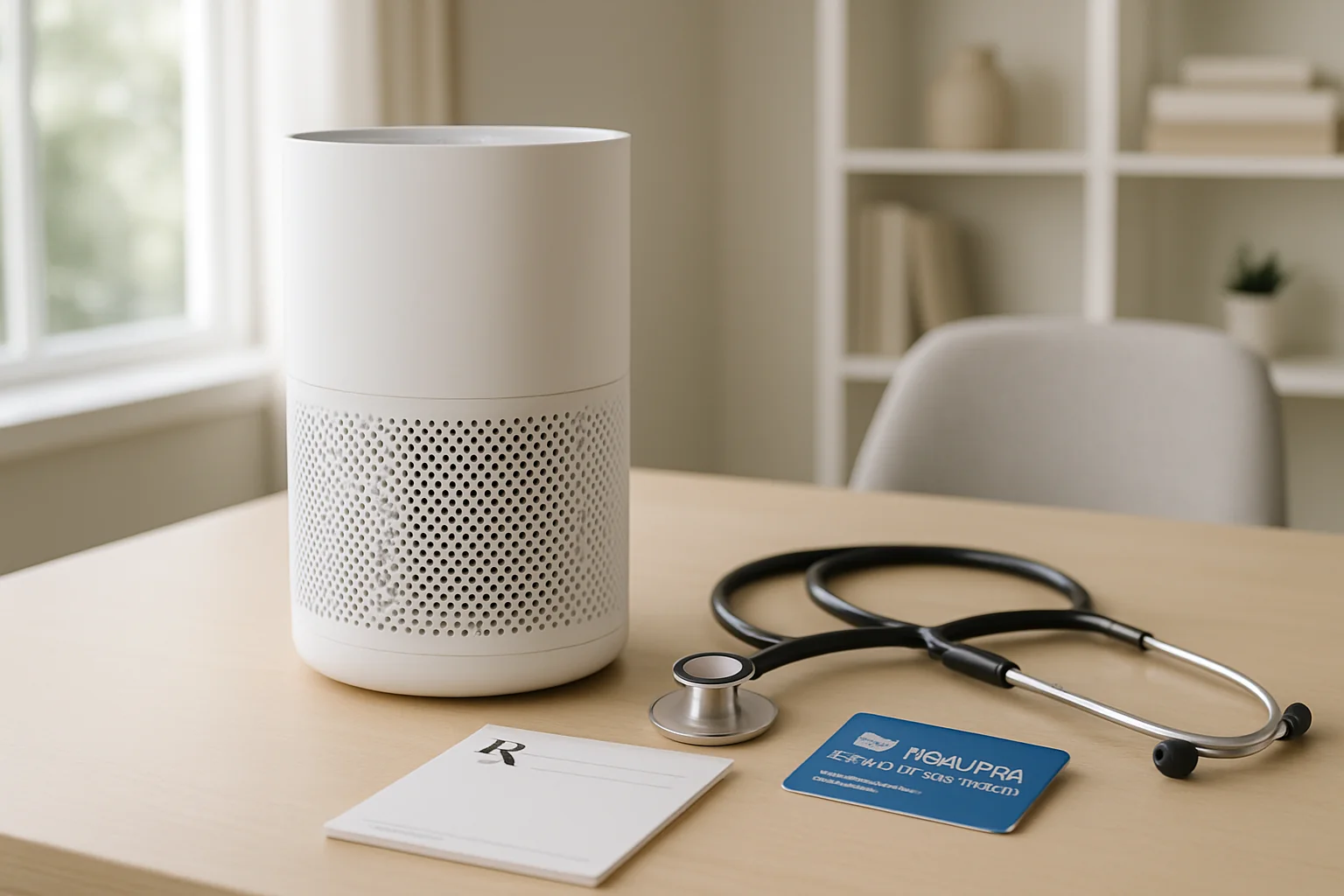
Air purifiers fall under Treasury Regulation 1.213-1(e)(1)(iii), which covers items that serve a personal, non-medical purpose as easily as a medical one. A purifier can sit in a living room purely for comfort, or it can be part of managing a diagnosed respiratory condition. The IRS doesn't know which one is true for you — so it asks for a doctor to say so in writing. That written statement is the Letter of Medical Necessity, and without it, an air purifier is treated as a general household purchase, not a medical expense.
This is also why "merely beneficial to general health" is the phrase that sinks so many claims. Buying a purifier because indoor air quality matters, in the abstract, isn't the same as buying one because a physician has documented that it treats or mitigates a specific condition you have. The letter is what draws that line.
Getting a Letter of Medical Necessity
An LMN doesn't need to be complicated, but it does need specific elements. A letter that's missing any of these is the kind of thing an administrator kicks back:
- Your diagnosis, ideally with the ICD-10 code attached
- The specific device recommended — an air purifier, described clearly enough that a reviewer can match it to your receipt
- Why the device treats or mitigates the condition — a sentence connecting the diagnosis to the recommendation
- Duration of use — LMNs are typically treated as valid for 12 months, after which most facilitators require a renewal
- A signature and date from a licensed clinician, dated on or before the day you make the purchase
There are two practical paths to get one. The first is your own doctor, during a regular visit — you mention the condition, they write the letter, done. The second is a telehealth facilitator built into a lot of purifier brands' checkout flows (TrueMed and Flex are the two you'll run into most). You fill out a short health questionnaire, a licensed clinician reviews it, and the letter typically comes back within 24 to 48 hours. Several major purifier brands — Molekule, Alen, Medify, Rabbit Air, Blueair, AirDoctor, and IQAir among them — have this built directly into checkout, so you complete the LMN step and the purchase in one pass.
The one rule that overrides everything else: the letter has to be dated before or on the day of purchase. There's no retroactive eligibility. If you buy the purifier on a Tuesday and get the letter on Friday, that purchase doesn't qualify, full stop — even if the underlying medical need was real the whole time. If you're going the facilitator route, get the letter first, then buy.
Qualifying Conditions Doctors Actually Approve
Administrators and telehealth reviewers aren't inventing a diagnosis for you — they're documenting one you already have or are being evaluated for. Conditions that consistently support an air purifier LMN include:
- Asthma
- Allergic rhinitis (seasonal or year-round allergies)
- Chronic obstructive pulmonary disease (COPD)
- Chronic sinusitis
- Chronic bronchitis
- Mold sensitivity
- Chemical sensitivity
- Immunocompromised status
If you already manage one of these with a physician, mentioning air quality as part of that management is a normal, low-friction conversation — not a stretch. I went through this myself for a persistent dust and pet-dander allergy, and the appointment took about the same time as any other check-in; the purifier came up naturally once I described what triggered my symptoms at home.
What doesn't tend to work: wanting cleaner air in general, wildfire smoke you're anticipating but haven't yet been affected by, or a vague sense that "everyone should filter their air." Those might all be reasonable purchase motivations — they're just not medical ones in the IRS's eyes.
HSA vs. FSA: What Actually Changes for a Purifier
The eligibility rule is identical for both — dual-purpose item, LMN required. What differs is how the money behaves, which matters more than people expect when you're timing a purifier purchase.
| HSA | FSA | |
|---|---|---|
| Requires a high-deductible health plan (HDHP) | Yes | No |
| Unused funds roll over year to year | Yes | Generally no (use-it-or-lose-it, unless your plan has a grace period or limited carryover) |
| 2026 contribution limit | $4,400 individual / $8,750 family (+$1,000 catch-up at 55+) | $3,400 salary-reduction limit; $680 max carryover if your plan allows one |
| Portability if you change jobs | Yes, the account is yours | No, tied to the employer plan |
| Non-qualified withdrawal penalty (under 65) | Income tax + 20% penalty | N/A — FSA funds are pre-authorized for eligible expenses only |
The practical takeaway: if you have an FSA and it's use-it-or-lose-it, timing your purifier purchase (and your LMN) before your plan year closes matters a lot more than it does with an HSA, where the money just waits for you. Either way, note that a general-purpose FSA disqualifies you from also contributing to an HSA — you can't stack both types casually.
Three Air Purifiers That Make the Paperwork Easier
Any HEPA purifier can theoretically qualify with a valid LMN. But some brands have built HSA/FSA facilitators directly into their checkout, which removes a step. Here's one option at each price tier, including two that require the separate reimbursement route.
LEVOIT Core 300 / Core 300-P — Budget Pick
Specs
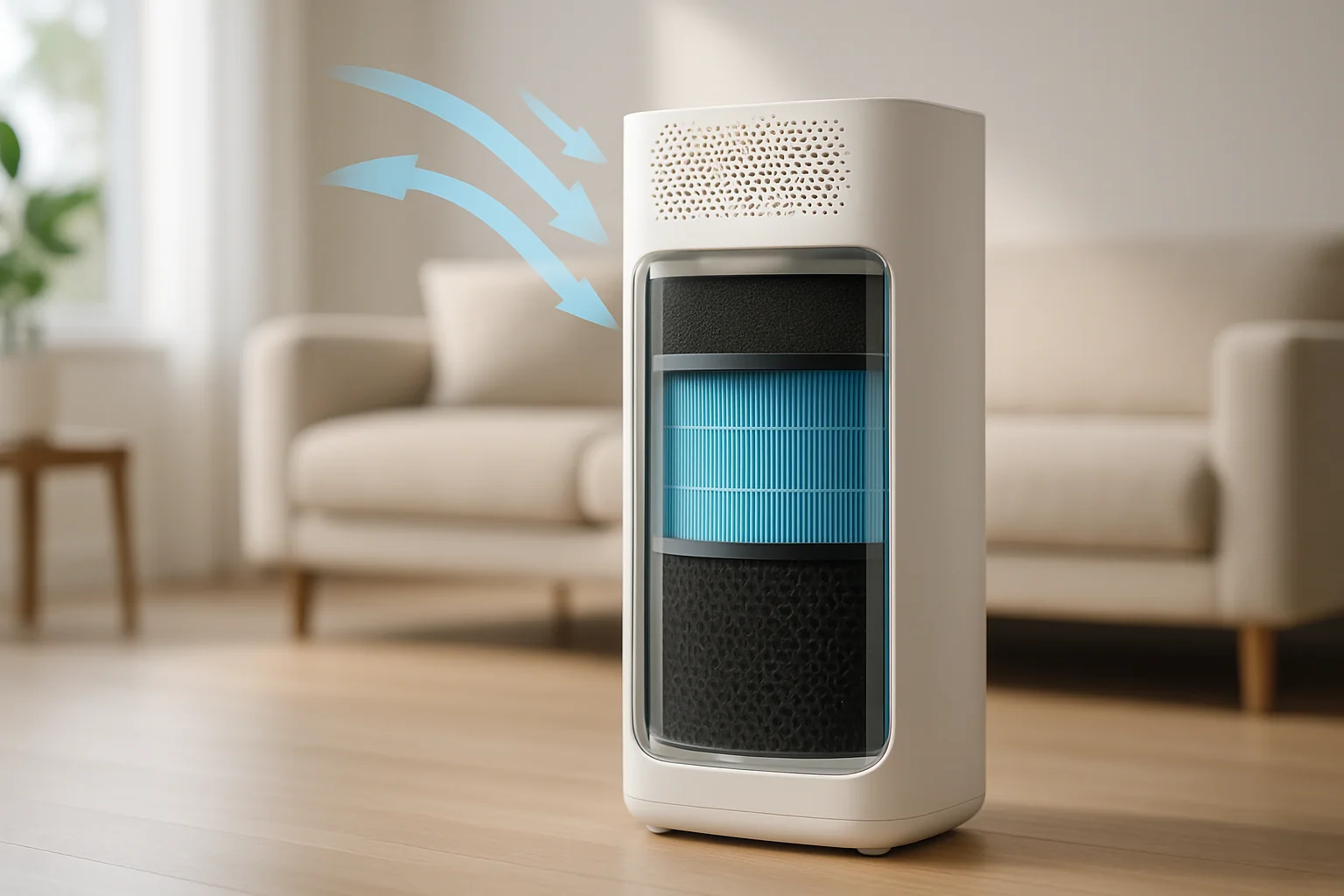
- 3-in-1 filtration: pre-filter, H13/HEPA-grade filter, activated carbon
- AHAM Verifide, CADR ~141–143 CFM (smoke)
- Around 24 dB on Sleep Mode; zero ozone emissions; CARB compliant
- Filters last roughly 6–8 months
Positioning: Entry-level tier — a reasonable single-room pick if your documented need is a bedroom or home office rather than a whole floor.
Reimbursement path: No built-in LMN checkout on Amazon. You'll get your letter separately (your own doctor or a facilitator), pay normally, then submit the receipt and LMN to your plan administrator.
Pros
- Very quiet at low speed
- Cheap to keep filters stocked
- A popular choice on Amazon at this size
Cons
- Coverage is modest for larger rooms
- No app or smart controls
- No native HSA/FSA checkout, so it's on you to track the paperwork
Verdict: A solid, low-friction choice if your documented need is a single room and you don't mind handling the reimbursement paperwork yourself.
Perfect for: Someone with a bedroom-specific allergy or asthma trigger who wants low cost and low noise.
COWAY Airmega 200M — Mid-Tier Pick
Specs
- 4-stage filtration: washable pre-filter, activated carbon, True HEPA, optional low-ozone ionizer
- CADR 246 dust / 240 pollen / 233 smoke, AHAM coverage around 360 sq ft
- 24.4 dB on low; auto mode with a color-coded air-quality ring
- HEPA filter lasts about 12 months, carbon about 6
Positioning: Mid-range — enough coverage for a living room or larger bedroom, with a washable pre-filter that keeps ongoing filter costs down.
Reimbursement path: Same as the Levoit — no dedicated LMN checkout, so this goes through the standard receipt-plus-letter reimbursement process.
Pros
- Genuinely quiet even at higher fan speeds
- AHAM-verified numbers you can point to in documentation
- Auto mode adjusts fan speed to real particle counts
Cons
- No Wi-Fi or app control
- The optional ionizer adds a small amount of ozone if left on
- Still requires you to manage reimbursement manually
Verdict: The strongest documentation-friendly pick for a bigger room, since its AHAM Verifide numbers are exactly the kind of specific detail an administrator likes to see referenced.
Perfect for: Someone furnishing a claim for a living room or open-plan space who wants a purifier with clearly published, third-party-verified performance numbers.
Alen BreatheSmart 75i — Premium Pick
Specs
- Medical-grade H13 True HEPA, capturing 99.99% of particles down to 0.1 micron
- Optional Fresh/Odor filter adds substantial activated carbon for VOC and odor control
- Dust CADR around 351 CFM, coverage up to roughly 1,300 sq ft
- RFID-tracked filter life around 10–12 months; lifetime warranty with active registration
Positioning: Premium tier — built for larger rooms or open floor plans, and for anyone dealing with VOCs or odors on top of particulates.
Reimbursement path: Alen runs its own HSA/FSA checkout powered by a telehealth facilitator — you complete a short health questionnaire, a clinician issues the LMN, and you pay with your HSA/FSA card in the same transaction. Filter subscriptions through that same checkout are not eligible, so pay for filters separately if you want them to count.
Pros
- The cleanest one-step buy-plus-LMN experience of the three
- Strong particulate and odor performance for larger spaces
- Lifetime warranty if you stay registered and current on filters
Cons
- Meaningfully more expensive than the other two
- The lifetime warranty requires an active filter subscription, which the LMN checkout won't cover
- Larger footprint than a single-room unit needs
Verdict: If you want the paperwork handled at checkout instead of after the fact, this is the most direct route — you just need to buy filters separately if you want them reimbursed too.
Perfect for: Someone furnishing a whole living area, dealing with odors or VOCs alongside allergens, who'd rather not manage a separate reimbursement claim.
Filters, Subscriptions, and What Doesn't Qualify
Replacement filters follow the same logic as the purifier itself: if the unit qualifies and your LMN is current, the filters that keep it running generally qualify too. Where people trip up is subscriptions. A recurring filter subscription is a convenience product, and most facilitator checkouts exclude it explicitly — the LMN covers a purchase tied to your documented need, not an ongoing auto-ship arrangement layered on top. If you want filters reimbursed, buy them as individual purchases against your card or receipts, not through a subscription.
Whole-house and central air filtration systems are a different story entirely. The IRS treats permanent additions to your home as capital improvements, and the rule there is that only the amount by which the improvement exceeds any increase in your home's value counts as a medical expense — which in practice is often close to nothing, since a filtration upgrade tends to add real resale value. A portable purifier you can take with you when you move doesn't have that complication, which is a meaningful part of why portables dominate this space.
Common Mistakes That Get Claims Denied
I've seen the same handful of errors come up again and again, both from my own experience and from patterns across facilitator reviews:
- Buying before the LMN is dated. This is the single most common denial reason, and there's no fixing it after the fact.
- A vague receipt. "Home appliance" or "electronics" on a receipt doesn't match a medical claim. You want "HEPA air purifier" or the specific model name visible.
- Missing pieces on the letter itself — no ICD-10 code, no signature, no clear device recommendation.
- Trying to reimburse a subscription instead of a one-time filter purchase.
- Assuming a whole-house system qualifies the same way a portable unit does.
A friend of mine ran into the vague-receipt problem last year — he'd bought a purifier through a general retailer, the receipt just read "small appliance," and his administrator asked for something more specific before they'd process it. He had to go back and get an itemized copy. It's a small thing, but it's exactly the kind of detail that stalls an otherwise valid claim.
Keeping Records for an Audit
You don't submit your LMN or receipts to the IRS when you file — HSA distributions get reported on Form 1099-SA, and that's typically the extent of what shows up on your tax return. But the IRS can ask for documentation later if your account is audited, so the practical move is to keep your LMN and itemized receipts on file for around three years. If a withdrawal later turns out not to qualify, you're on the hook for income tax on that amount, plus a 20% penalty if you're under 65 — which is exactly why the letter-first, buy-second order matters so much.
One more distinction worth knowing: reimbursing an air purifier through HSA/FSA is a completely separate track from deducting medical expenses on Schedule A, which only kicks in once your total unreimbursed medical costs exceed 7.5% of your adjusted gross income. Most people will never hit that threshold for a single purifier purchase — the HSA/FSA route is the one that actually applies here.
Frequently Asked Questions
Q: Do all air purifiers qualify for HSA or FSA reimbursement?
No. Air purifiers are classified as dual-purpose items, which means they only qualify when a Letter of Medical Necessity ties the purchase to a diagnosed condition. Buying one for general comfort or air quality doesn't meet the standard on its own.
Q: What has to be included in a Letter of Medical Necessity?
A valid LMN includes your diagnosis (ideally with an ICD-10 code), the specific device recommended, an explanation of how it treats or mitigates the condition, the duration of use, and a signature and date from a licensed clinician. The date has to be on or before your purchase date.
Q: Can I use HSA or FSA funds for replacement filters?
Usually, yes, as long as the original purifier qualifies and your LMN is still current. Filter subscriptions are the exception — most facilitator checkouts exclude recurring subscriptions, so buy filters as individual purchases if you want them reimbursed.
Q: If I have a valid LMN, will my claim automatically be approved?
Not necessarily. A facilitator's LMN is a legitimate document, but your plan administrator has the final say on any claim and can still deny it based on their own review. A letter improves your odds significantly — it doesn't guarantee reimbursement.
Q: Does a whole-house or central air filtration system qualify?
Generally no. The IRS treats permanent home additions as capital improvements, and only the portion of the cost that doesn't increase your home's value would count — which is often minimal. Portable, room-specific purifiers avoid this issue entirely.
Q: What happens if I use HSA funds on something that turns out not to qualify?
The withdrawal becomes taxable income, and if you're under 65, you'll also owe a 20% penalty on top of that. This is the main reason to get your LMN sorted before you buy, not after.
Conclusion
An air purifier can be a legitimate HSA or FSA expense, but only when the paperwork comes first. The letter has to exist and be dated before you buy, it has to name a real diagnosis, and even then, your plan administrator — not the retailer, not the telehealth service that wrote the letter — makes the final call. That's a more honest picture than the "yes, it's eligible!" headlines you'll find elsewhere, but it's also the version that actually gets your claim approved instead of denied three weeks later.
If you're starting from zero, the fastest path is picking a purifier from a brand with a built-in HSA/FSA checkout, so the questionnaire, the LMN, and the purchase happen in one sitting. If you already have a preferred unit and a doctor you see regularly, mentioning your symptoms at your next visit and asking for the letter directly works just as well — it just takes an extra step of manual reimbursement afterward. Either way, keep the letter and the receipt together, and don't spend the money until the ink on that letter is already dry.